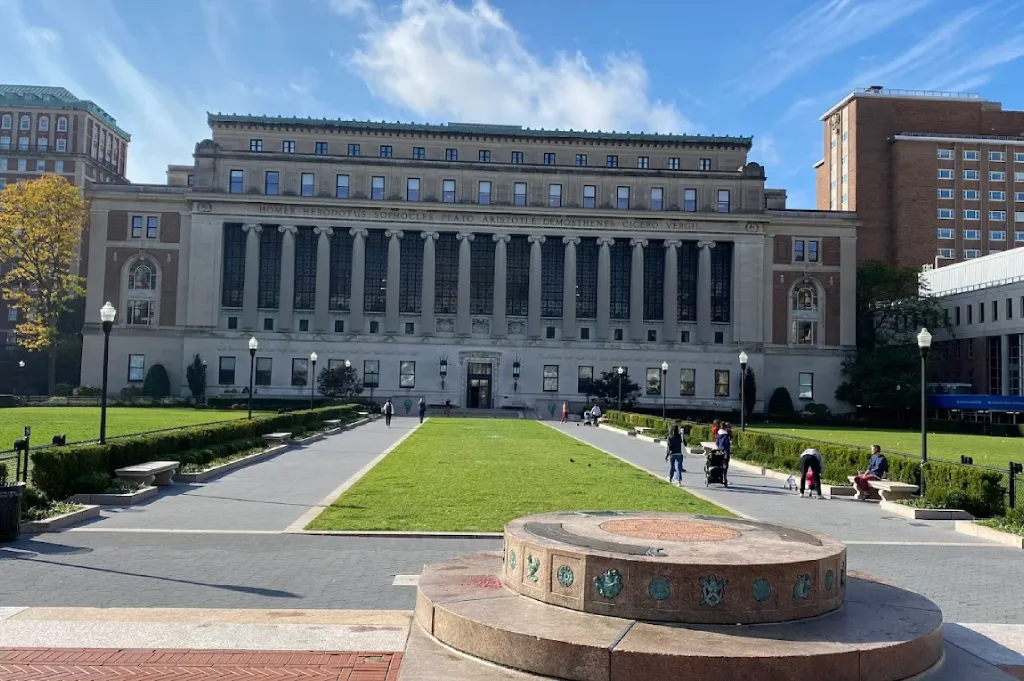
Columbia University School of Law
Lawzee EliteOverview
Columbia Law School (CLS), located in the Morningside Heights neighborhood of New York City, is one of the original 'Ivy League' law schools and a perennial member of the top tier. Established in 1858, it is renowned for its immense influence on the global legal economy. Due to its location and reputation, Columbia functions as the primary feeder school for the world's most elite 'BigLaw' firms (such as Wachtell, Lipton, Rosen & Katz and Cravath, Swaine & Moore). It offers an unmatched connection to Wall Street, the United Nations, and the federal judiciary.
Academic Environment
Columbia is known for having a more traditional and rigorous structure than some of its peers. Unlike Yale or Harvard (which use High Pass/Pass/Fail), Columbia uses a real letter grading system (A, B, C with +/-). This granular ranking is highly prized by corporate employers because it makes distinguishing top talent easy. All 1Ls begin with an intensive three-week course called 'Legal Methods' in August, before other classes start. It is a legendary 'boot camp' for reading cases. Columbia offers a unique January Term, allowing students to take intensive one-week courses on specialized topics (like 'Deals' or 'Bioethics') often taught by star practitioners flying in from around the globe.
Career Outcomes
Columbia Law School is statistically the #1 Law School for 'BigLaw' Placement (often trading places with Penn). Roughly 70-80% of graduates head directly into large law firms with market-leading salaries ($225k+ starting). While it has strong clerkship numbers, its 'superpower' is its dominance of the New York Legal Market. If you want to work in high-stakes Mergers & Acquisitions (M&A), Private Equity, or International Arbitration, Columbia is the gold standard.
Areas of Study
Top Clinics
Journals
LSAT Score Distribution
A median LSAT of 173 places Columbia Law among the most competitive law schools. Applicants below 170 should consider retaking the exam or emphasizing other strong application components.
Undergraduate GPA Distribution
Application Components
- ✓Personal Statement
- ✓CAS Report (LSAT & Transcripts)
- ✓2-3 Letters of Recommendation
- ✓Resume
- ?Diversity Statement (Optional)
- ?Interview (By Invitation)
Frequently Asked Questions about Columbia Law
Is it hard to get into Columbia University School of Law?
Yes, Columbia Law is extremely competitive with an acceptance rate of 11.9%. Successful applicants typically have LSAT scores above 170 and GPAs above 3.78.
What is the lowest LSAT accepted?
While there is no strict minimum, the 25th percentile LSAT score is 170. Applicants scoring below this number face significant challenges but may be considered if they have exceptionally strong soft factors or work experience.
Does Columbia Law require an interview?
Interview policies vary by year, but top-tier schools like Columbia Law often use interviews (by invitation) to evaluate candidates holistically. Check the specific requirements in the Admissions section above.
What is the employment rate for graduates?
97.5% of graduates are employed 10 months after graduation. A significant portion (79.13%) go into BigLaw firms, while 6.6% secure federal clerkships.