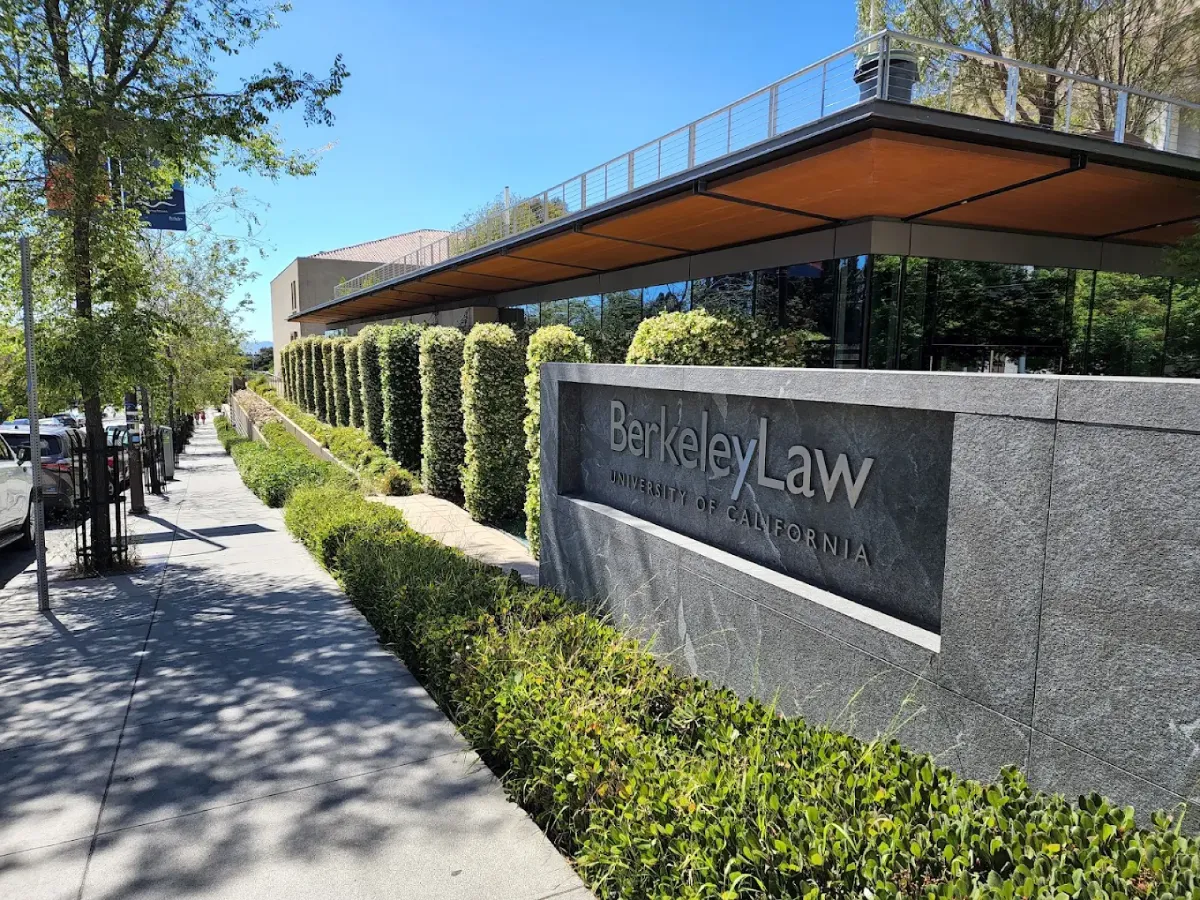
University of California, Berkeley, School of Law
Lawzee EliteOverview
The University of California, Berkeley, School of Law (Berkeley Law), is consistently ranked among the top 10 law schools in the world and frequently competes for the title of the nation’s #1 public law school. Known for its distinctively progressive culture and rigorous intellectualism, Berkeley Law offers a world-class education that rivals Harvard and Yale. It is a magnet for students who want to blend high-level legal theory with social justice activism or cutting-edge technology policy.
Academic Environment
Berkeley Law is famous for its lack of letter grades. It is one of the few schools (along with Yale and Stanford) that uses a High Honors / Honors / Pass grading system. This system eliminates class rankings and GPAs, significantly reducing student stress and fostering a deeply collaborative 'we’re in this together' atmosphere. Berkeley is practically unrivaled in specific niches. It is consistently ranked #1 in Intellectual Property (IP) Law and #1 in Environmental Law. If you want to save the planet or regulate AI, this is the place to be.
Career Outcomes
Berkeley Law is the ultimate feeder school for Silicon Valley and the San Francisco legal markets. It is the target school for elite tech-focused firms (like Wilson Sonsini, Cooley, and Fenwick & West) that handle legal matters for companies like Google and Apple. However, its reach is national; Berkeley has a massive alumni network in New York City and Washington D.C., and it is a powerhouse for placing graduates into prestigious public interest fellowships and 9th Circuit federal clerkships.
Areas of Study
Top Clinics
Journals
LSAT Score Distribution
A median LSAT of 170 places Berkeley Law among the most competitive law schools. Applicants below 167 should consider retaking the exam or emphasizing other strong application components.
Undergraduate GPA Distribution
Application Components
- ✓Personal Statement
- ✓CAS Report (LSAT & Transcripts)
- ✓2-3 Letters of Recommendation
- ✓Resume
- ?Diversity Statement (Optional)
- ?Interview (By Invitation)
Frequently Asked Questions about Berkeley Law
Is it hard to get into University of California, Berkeley, School of Law?
Yes, Berkeley Law is extremely competitive with an acceptance rate of 12.5%. Successful applicants typically have LSAT scores above 167 and GPAs above 3.75.
What is the lowest LSAT accepted?
While there is no strict minimum, the 25th percentile LSAT score is 167. Applicants scoring below this number face significant challenges but may be considered if they have exceptionally strong soft factors or work experience.
Does Berkeley Law require an interview?
Interview policies vary by year, but top-tier schools like Berkeley Law often use interviews (by invitation) to evaluate candidates holistically. Check the specific requirements in the Admissions section above.
What is the employment rate for graduates?
99% of graduates are employed 10 months after graduation. A significant portion (64%) go into BigLaw firms, while 12.6% secure federal clerkships.