University of Michigan Law School
Lawzee EliteOverview
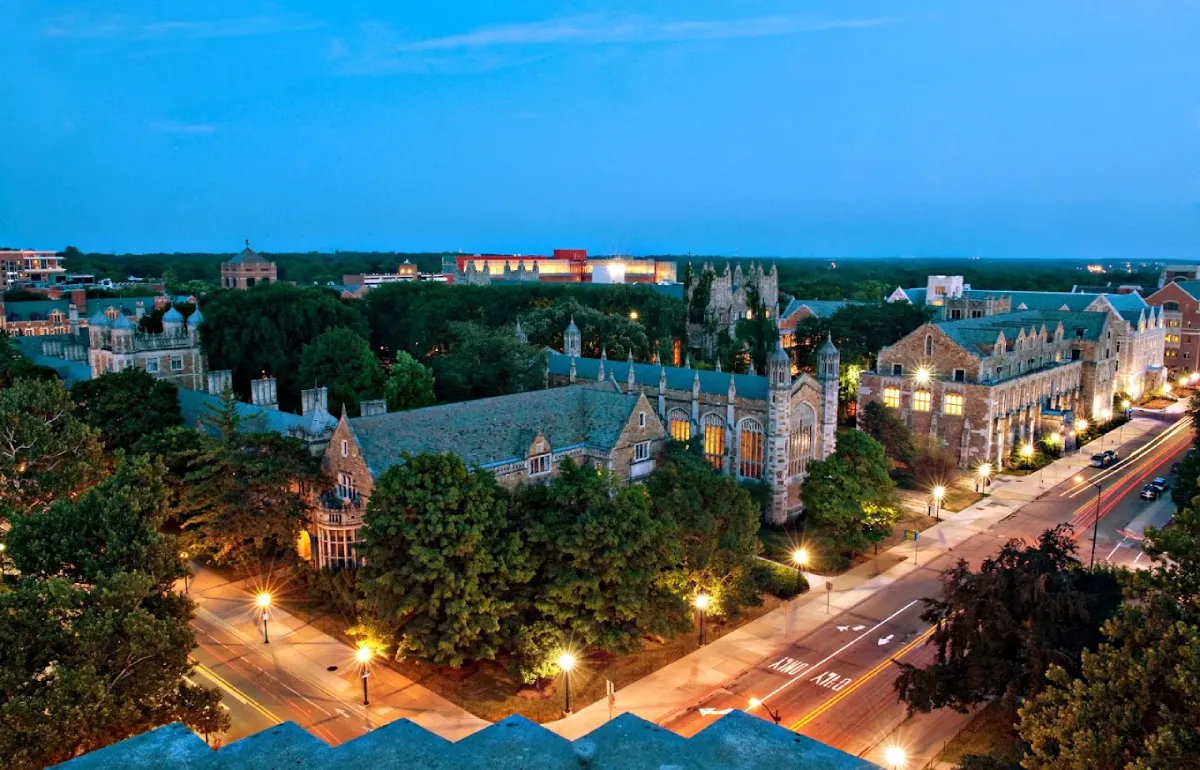
The University of Michigan Law School, located in Ann Arbor, is one of the oldest and most prestigious public law schools in the United States. As a perennial member of the 'T14', it blends the resources of a major research university with the feel of a self-contained residential law community built around its famous Gothic Quadrangle.
Academic Environment
Michigan Law is known for its collaborative, down-to-earth culture and a curriculum that encourages exploration across disciplines. Students routinely take courses in other top-ranked Michigan departments, and the law school offers a wide array of clinics and seminars that emphasize real-world lawyering skills alongside theory.
Career Outcomes
Graduates of Michigan Law enjoy exceptional outcomes across markets and practice areas. The school is a dominant feeder into national BigLaw firms, but also has a strong track record in federal clerkships and public service. Its alumni network is especially deep in the Midwest, New York, and Washington, D.C.
Areas of Study
Top Clinics
Journals
LSAT Score Distribution
A median LSAT of 171 places Michigan Law among the most competitive law schools. Applicants below 167 should consider retaking the exam or emphasizing other strong application components.
Undergraduate GPA Distribution
Application Components
- ✓Personal Statement
- ✓CAS Report (LSAT & Transcripts)
- ✓2-3 Letters of Recommendation
- ✓Resume
- ?Diversity Statement (Optional)
- ?Interview (By Invitation)
Frequently Asked Questions about Michigan Law
Is it hard to get into University of Michigan Law School?
Yes, Michigan Law is extremely competitive with an acceptance rate of 11.9%. Successful applicants typically have LSAT scores above 167 and GPAs above 3.7.
What is the lowest LSAT accepted?
While there is no strict minimum, the 25th percentile LSAT score is 167. Applicants scoring below this number face significant challenges but may be considered if they have exceptionally strong soft factors or work experience.
Does Michigan Law require an interview?
Interview policies vary by year, but top-tier schools like Michigan Law often use interviews (by invitation) to evaluate candidates holistically. Check the specific requirements in the Admissions section above.
What is the employment rate for graduates?
93.5% of graduates are employed 10 months after graduation. A significant portion (60%) go into BigLaw firms, while 15% secure federal clerkships.