Browse Law Schools by State

Law Schools in AlabamaLaw Schools in AlaskaLaw Schools in ArizonaLaw Schools in ArkansasLaw Schools in CaliforniaLaw Schools in ColoradoLaw Schools in ConnecticutLaw Schools in DelawareLaw Schools in DCLaw Schools in FloridaLaw Schools in GeorgiaLaw Schools in HawaiiLaw Schools in IdahoLaw Schools in IllinoisLaw Schools in IndianaLaw Schools in IowaLaw Schools in KansasLaw Schools in KentuckyLaw Schools in LouisianaLaw Schools in MaineLaw Schools in MarylandLaw Schools in MassachusettsLaw Schools in MichiganLaw Schools in MinnesotaLaw Schools in MississippiLaw Schools in MissouriLaw Schools in MontanaLaw Schools in NebraskaLaw Schools in NevadaLaw Schools in New HampshireLaw Schools in New JerseyLaw Schools in New MexicoLaw Schools in New YorkLaw Schools in North CarolinaLaw Schools in North DakotaLaw Schools in OhioLaw Schools in OklahomaLaw Schools in OregonLaw Schools in PennsylvaniaLaw Schools in Rhode IslandLaw Schools in South CarolinaLaw Schools in South DakotaLaw Schools in TennesseeLaw Schools in TexasLaw Schools in UtahLaw Schools in VermontLaw Schools in VirginiaLaw Schools in WashingtonLaw Schools in West VirginiaLaw Schools in WisconsinLaw Schools in Wyoming
LawZee.com

Your trusted resource for legal education guidance.

Quick Links

  • T14 Law Schools
  • Best for BigLaw
  • Cheapest Law Schools
  • Highest Bar Pass Rates

Law Schools

  • Browse All Schools
  • Find by Location
  • Compare Schools

Resources

  • LSAT Prep
  • Admissions Guide
  • Career Paths

Tools

  • Admission Calculator
  • Scholarship Calculator
  • LSAT Proctor Timer
  • ROI & Debt Calculator

© 2026 LawZee.com. All rights reserved.

LawZee.com
Law SchoolsCitiesResourcesAbout
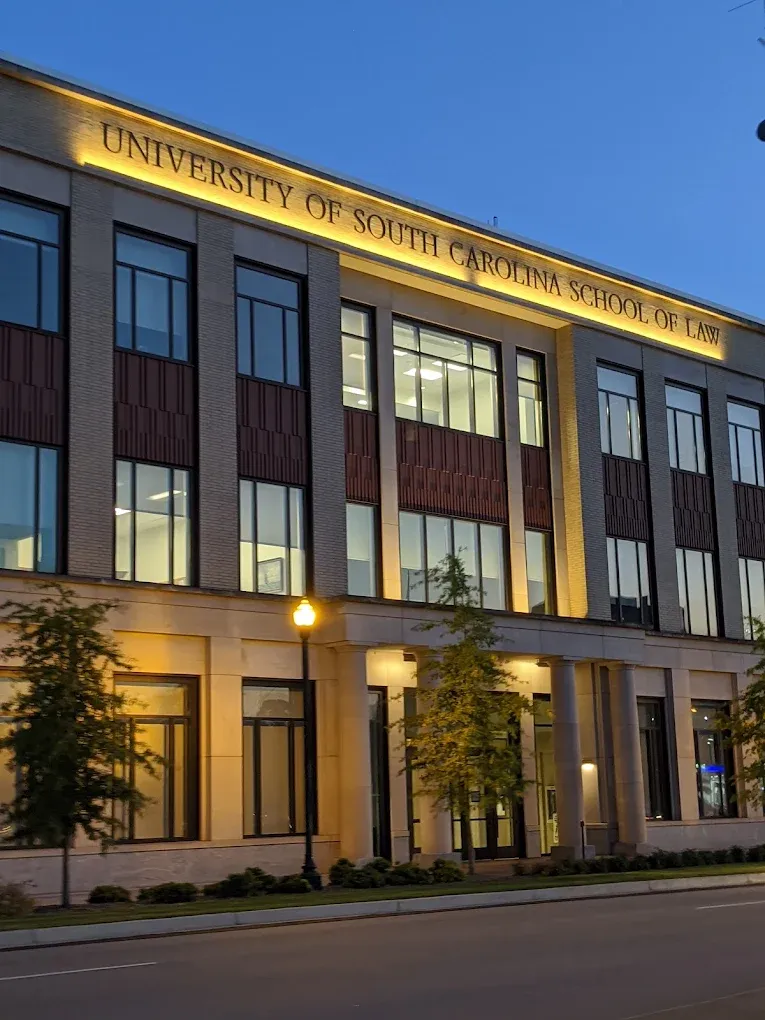
University of South Carolina School of Law

University of South Carolina School of Law

Lawzee Strong
1525 Senate Street, Columbia, SC 29201
Established 1867 • ABA, AALS Accredited

Overview

South Carolina Law offers a practice-focused legal education with a strong regional reputation and close connections to the South Carolina legal community.

Academic Environment

Students benefit from small class sizes, accessible faculty, and extensive clinical and externship opportunities in Columbia's courts, agencies, and law offices.

Career Outcomes

Graduates commonly work in regional law firms, government, and judicial clerkships across South Carolina and the Southeast.

Areas of Study

Business and Commercial LawEnvironmental LawChildren's LawLitigation and Trial Advocacy

Top Clinics

Children's Law ClinicCriminal Practice ClinicEnvironmental Law Clinic

Journals

South Carolina Law ReviewSouth Carolina Journal of International Law and Business
At a Glance
Acceptance Rate44%
Median LSAT158
Median GPA3.5
Tuition$34,000
Bar Pass Rate85%
What are your chances?
Estimate Your Scholarship

Median Award

$11,000

% Receiving Aid

93%

Contact Admissions
(803) 777-6605
admissions@law.sc.edu
Visit Website
Class Profile Analysis

LSAT Score Distribution

155
25th Percentile
158
Median
161
75th Percentile

A median LSAT of 158 places South Carolina Law among the most competitive law schools. Applicants below 155 should consider retaking the exam or emphasizing other strong application components.

Undergraduate GPA Distribution

3.3
25th Percentile
3.5
Median
3.7
75th Percentile
Deadlines & Requirements
Application Deadline
March 1
Early Decision
November 15

Application Components

  • ✓
    Personal Statement
  • ✓
    CAS Report (LSAT & Transcripts)
  • ✓
    2-3 Letters of Recommendation
  • ✓
    Resume
  • ?
    Diversity Statement (Optional)
  • ?
    Interview (By Invitation)

Frequently Asked Questions about South Carolina Law

Is it hard to get into University of South Carolina School of Law?

University of South Carolina School of Law is moderately competitive with an acceptance rate of 44%. Applicants with scores near the median of 158 LSAT and 3.5 GPA have a strong chance of admission.

What is the lowest LSAT accepted?

While there is no strict minimum, the 25th percentile LSAT score is 155. Applicants scoring below this number face significant challenges but may be considered if they have exceptionally strong soft factors or work experience.

Does South Carolina Law require an interview?

Interview policies vary by year, but top-tier schools like South Carolina Law often use interviews (by invitation) to evaluate candidates holistically. Check the specific requirements in the Admissions section above.

What is the employment rate for graduates?

87% of graduates are employed 10 months after graduation. Graduates find positions across private practice, government, and public interest sectors.