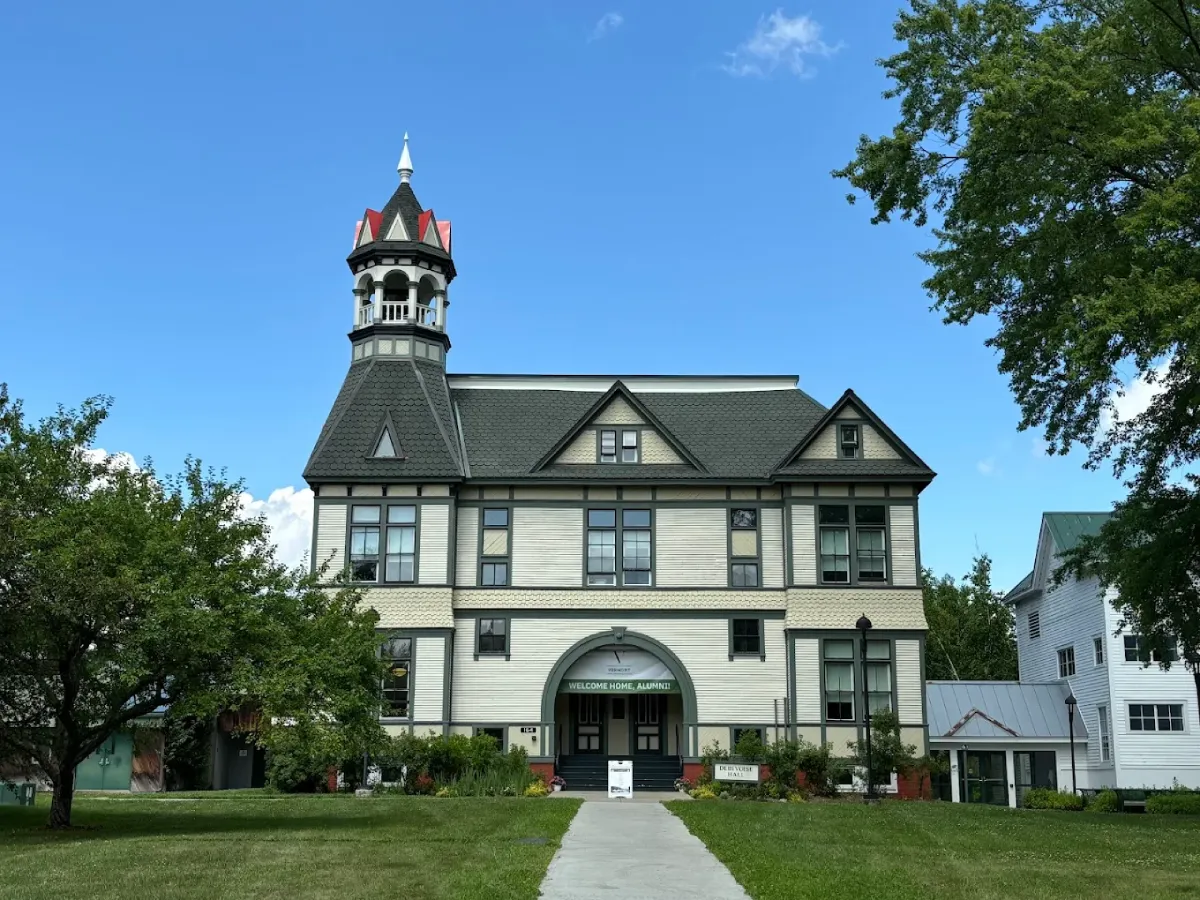
Vermont Law and Graduate School
Lawzee EliteOverview
Vermont Law and Graduate School offers a J.D. and a range of graduate law and policy degrees focused on environmental protection, energy transition, and food and agriculture systems.
Academic Environment
Students learn in an intimate, rural campus setting with extensive opportunities for experiential learning through clinics, centers, and policy work focused on environmental and social justice issues.
Career Outcomes
Graduates pursue careers in environmental and energy law, public-interest practice, government, and nonprofit advocacy across New England, the U.S., and internationally.
Areas of Study
Top Clinics
Journals
LSAT Score Distribution
A median LSAT of 151 places Vermont Law among the most competitive law schools. Applicants below 147 should consider retaking the exam or emphasizing other strong application components.
Undergraduate GPA Distribution
Application Components
- ✓Personal Statement
- ✓CAS Report (LSAT & Transcripts)
- ✓2-3 Letters of Recommendation
- ✓Resume
- ?Diversity Statement (Optional)
- ?Interview (By Invitation)
Frequently Asked Questions about Vermont Law
Is it hard to get into Vermont Law and Graduate School?
Vermont Law and Graduate School is moderately competitive with an acceptance rate of 64.7%. Applicants with scores near the median of 151 LSAT and 3.18 GPA have a strong chance of admission.
What is the lowest LSAT accepted?
While there is no strict minimum, the 25th percentile LSAT score is 147. Applicants scoring below this number face significant challenges but may be considered if they have exceptionally strong soft factors or work experience.
Does Vermont Law require an interview?
Interview policies vary by year, but top-tier schools like Vermont Law often use interviews (by invitation) to evaluate candidates holistically. Check the specific requirements in the Admissions section above.
What is the employment rate for graduates?
80% of graduates are employed 10 months after graduation. A significant portion (2%) go into BigLaw firms, while 4% secure federal clerkships.