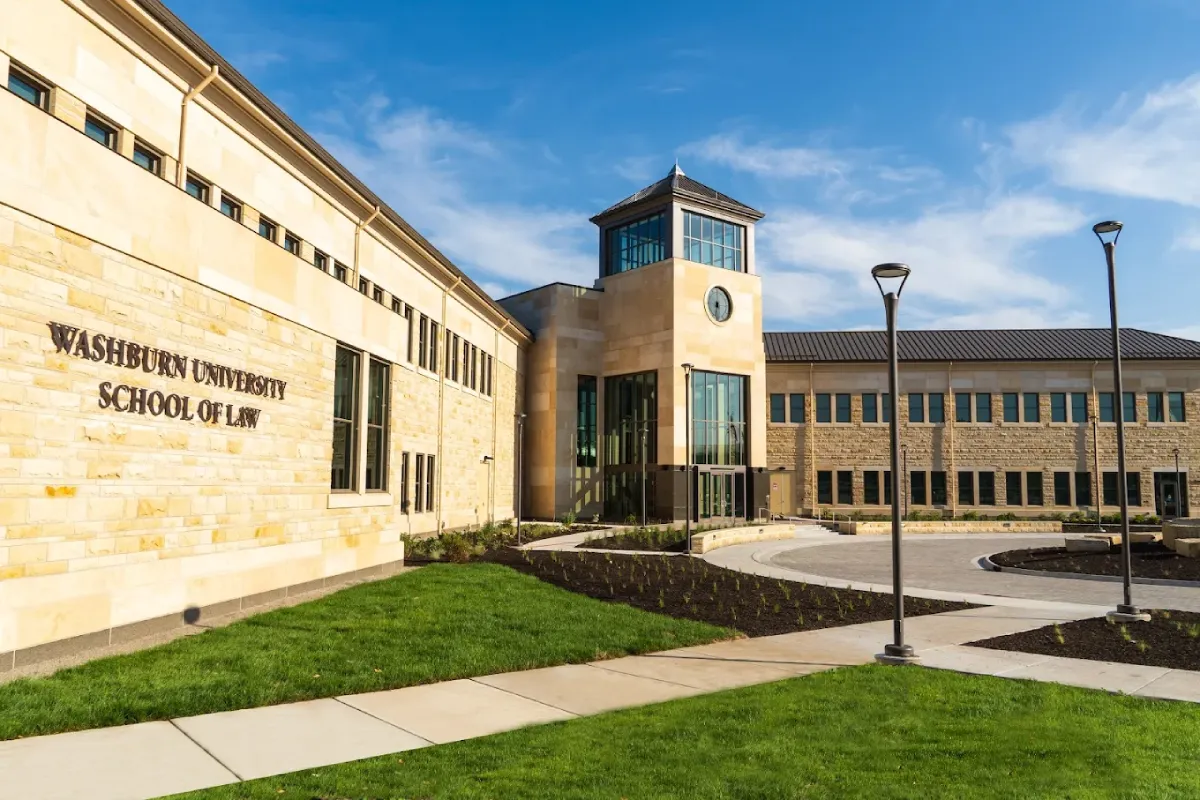
Washburn University School of Law
Lawzee EliteOverview
Founded in 1903, Washburn Law has a long history of producing judges, legislators, and practitioners who serve Kansas and the Great Plains. The school offers a traditional JD curriculum complemented by specialized offerings in oil and gas, natural resources, and government practice.
Academic Environment
Classes at Washburn Law are deliberately small, with an emphasis on access to professors and hands-on skills training. The law clinic, simulation courses, and externships with Kansas courts and agencies help students turn doctrine into day-to-day lawyering, while bar prep programming is woven throughout the upper-level curriculum.
Career Outcomes
Graduates typically launch their careers in Kansas, Missouri, Colorado, and nearby states, joining small and mid-sized firms, energy and utility companies, and state and local government. The school’s deep alumni network in the region’s judiciary and public sector provides ongoing mentoring and job leads for new lawyers.
Areas of Study
Top Clinics
Journals
LSAT Score Distribution
A median LSAT of 154 places Washburn Law among the most competitive law schools. Applicants below 150 should consider retaking the exam or emphasizing other strong application components.
Undergraduate GPA Distribution
Application Components
- ✓Personal Statement
- ✓CAS Report (LSAT & Transcripts)
- ✓2-3 Letters of Recommendation
- ✓Resume
- ?Diversity Statement (Optional)
- ?Interview (By Invitation)
Frequently Asked Questions about Washburn Law
Is it hard to get into Washburn University School of Law?
Washburn University School of Law is moderately competitive with an acceptance rate of 73.12%. Applicants with scores near the median of 154 LSAT and 3.6 GPA have a strong chance of admission.
What is the lowest LSAT accepted?
While there is no strict minimum, the 25th percentile LSAT score is 150. Applicants scoring below this number face significant challenges but may be considered if they have exceptionally strong soft factors or work experience.
Does Washburn Law require an interview?
Interview policies vary by year, but top-tier schools like Washburn Law often use interviews (by invitation) to evaluate candidates holistically. Check the specific requirements in the Admissions section above.
What is the employment rate for graduates?
84% of graduates are employed 10 months after graduation. A significant portion (5%) go into BigLaw firms, while 7% secure federal clerkships.