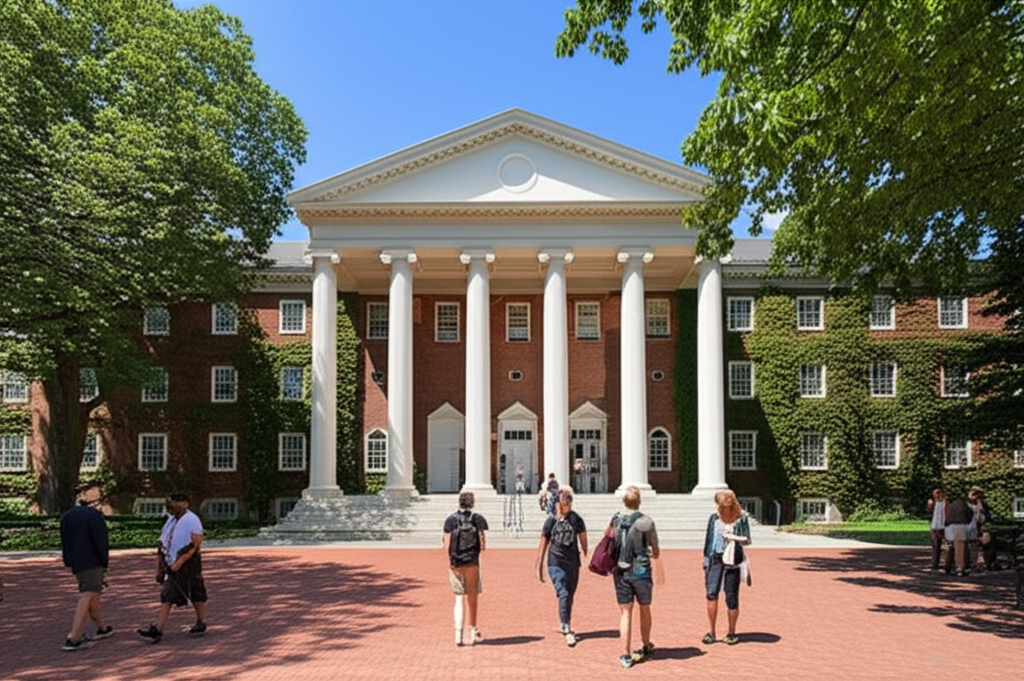
Harvard Law School
Lawzee EliteOverview
Harvard Law School (HLS) is one of the professional graduate schools of Harvard University. Founded in 1817, it is the oldest continuously operating law school in the U.S. and a member of the renowned 'T14' law schools. Known for producing leaders, its alumni include U.S. Presidents, Supreme Court Justices, and heads of state worldwide.
Academic Environment
HLS utilizes a distinctive grading system (Dean's Scholar, Honors, Pass, Low Pass, Fail) designed to reduce competition and encourage intellectual risk-taking. The curriculum is vast, allowing students to specialize in everything from Constitutional Law to Cyberlaw.
Career Outcomes
Harvard Law is a gateway to elite legal careers. It consistently boasts one of the highest Supreme Court clerkship placement rates in the nation. For private practice, HLS is a target school for every major 'BigLaw' firm in New York, D.C., and London, offering virtually guaranteed employment for graduates with passing grades.
Insider Perspective
Getting into Harvard Law is often less about perfect stats (though you need those) and more about your 'narrative arc.' Admissions officers see thousands of 3.9/174s; what they look for is a story that makes sense of your past and points inevitably toward a future legal career where you will be a leader. Don't just list your achievements; explain the 'why' behind them. The sheer scale of HLS is its biggest differentiator—you can find a niche in literally anything here, from space law to ancient canon law. However, this size means you must be proactive; no one will hold your hand. The 1L 'Section' experience is intense and bonds you for life with 80 other students who take all classes together. One unique aspect is the 'feral 2L' phenomenon—after a structured 1L year, you are suddenly released into a massive course catalog with zero requirements. Smart students use this freedom to cross-register at the Kennedy School or Business School. Another insider tip: while HLS is famous for producing Supreme Court clerks, the 'real' power of the degree often lies in its international portability—an HLS JD is recognized in boardrooms from London to Hong Kong in a way few other degrees are.
Areas of Study
Top Clinics
Journals
LSAT Score Distribution
A median LSAT of 174 places Harvard Law among the most competitive law schools. Applicants below 170 should consider retaking the exam or emphasizing other strong application components.
Undergraduate GPA Distribution
Application Components
- ✓Personal Statement
- ✓CAS Report (LSAT & Transcripts)
- ✓2-3 Letters of Recommendation
- ✓Resume
- ?Diversity Statement (Optional)
- ?Interview (By Invitation)
Frequently Asked Questions about Harvard Law
Is it hard to get into Harvard Law School?
Yes, Harvard Law is extremely competitive with an acceptance rate of 12.9%. Successful applicants typically have LSAT scores above 170 and GPAs above 3.89.
What is the lowest LSAT accepted?
While there is no strict minimum, the 25th percentile LSAT score is 170. Applicants scoring below this number face significant challenges but may be considered if they have exceptionally strong soft factors or work experience.
Does Harvard Law require an interview?
Interview policies vary by year, but top-tier schools like Harvard Law often use interviews (by invitation) to evaluate candidates holistically. Check the specific requirements in the Admissions section above.
What is the employment rate for graduates?
93.74% of graduates are employed 10 months after graduation. A significant portion (58%) go into BigLaw firms, while 18% secure federal clerkships.