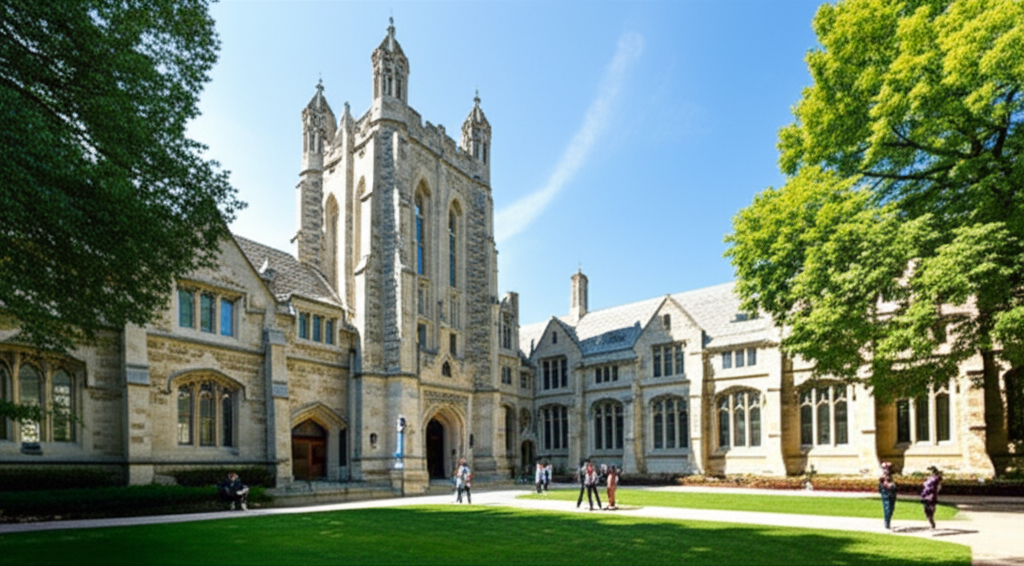
Yale Law School
Lawzee EliteOverview
Yale Law School (YLS), located in New Haven, Connecticut, is consistently ranked as the #1 law school in the country. It is the smallest and most selective of the top-tier institutions, admitting fewer than 200 students per year with an acceptance rate typically below 5%. Unlike its rivals, Yale functions less like a professional trade school and more like a graduate department of legal studies, fostering an environment of unparalleled academic freedom. It produces more legal academics and Supreme Court Justices per capita than any other institution in history.
Academic Environment
The 'Yale Difference' is defined by its lack of traditional competition. YLS is famous for having no grades during the first term (Credit/Fail) and a Honors/Pass/Low Pass/Fail system thereafter, with no class rankings ever recorded. This eliminates the 'cutthroat' culture found elsewhere, encouraging collaboration over competition. The curriculum is entirely open after the first semester, allowing students to design their own course of study or cross-register for virtually any class at Yale University without bureaucratic hurdles.
Career Outcomes
A Yale Law degree is widely considered the ultimate 'Golden Ticket' in the legal profession. YLS dominates the federal judiciary, placing a higher percentage of graduates into Federal and Supreme Court clerkships than any other school. It is also the premier feeder for legal academia; a significant portion of law professors at other top schools hold YLS degrees. While many graduates enter elite 'BigLaw' firms, Yale is also famous for its generous loan forgiveness program (COAP), allowing a large percentage of alumni to pursue high-impact Public Interest careers without financial burden.
Insider Perspective
Yale Law School is sui generis; it is frankly more of an academic think tank than a trade school for lawyers. If you want to be a law professor or a high-impact public interest leader, there is simply no better place. The 'Yale Paradox' is that it is the hardest law school to get into, but the easiest one to stay in once you're there. There are no grades (honors/pass/low pass/fail), no class rank, and almost no required classes after the first semester. This creates an environment of immense intellectual freedom but can be disorienting for students who crave structure. The 'Shop Book' process for getting onto the Yale Law Journal is a unique cultural phenomenon—unlike most schools where it's a write-on competition, at Yale, it's about persistent editing work. Admissions advice: Yale is obsessed with 'academic potential.' Your personal statement should read less like a resume summary and more like an intellectual biography. They want to see that you have a mind that will contribute to legal scholarship. Also, the 250-word essay is not a throwaway; it's a test of whether you can make a compelling, nuanced argument in a tight space. Don't be afraid to take a controversial stance, provided you defend it well.
Areas of Study
Top Clinics
Journals
LSAT Score Distribution
A median LSAT of 173 places Yale Law among the most competitive law schools. Applicants below 170 should consider retaking the exam or emphasizing other strong application components.
Undergraduate GPA Distribution
Application Components
- ✓Personal Statement
- ✓CAS Report (LSAT & Transcripts)
- ✓2-3 Letters of Recommendation
- ✓Resume
- ?Diversity Statement (Optional)
- ?Interview (By Invitation)
Frequently Asked Questions about Yale Law
Is it hard to get into Yale Law School?
Yes, Yale Law is extremely competitive with an acceptance rate of 5.25%. Successful applicants typically have LSAT scores above 170 and GPAs above 3.23.
What is the lowest LSAT accepted?
While there is no strict minimum, the 25th percentile LSAT score is 170. Applicants scoring below this number face significant challenges but may be considered if they have exceptionally strong soft factors or work experience.
Does Yale Law require an interview?
Interview policies vary by year, but top-tier schools like Yale Law often use interviews (by invitation) to evaluate candidates holistically. Check the specific requirements in the Admissions section above.
What is the employment rate for graduates?
96.9% of graduates are employed 10 months after graduation. A significant portion (25.6%) go into BigLaw firms, while 26% secure federal clerkships.