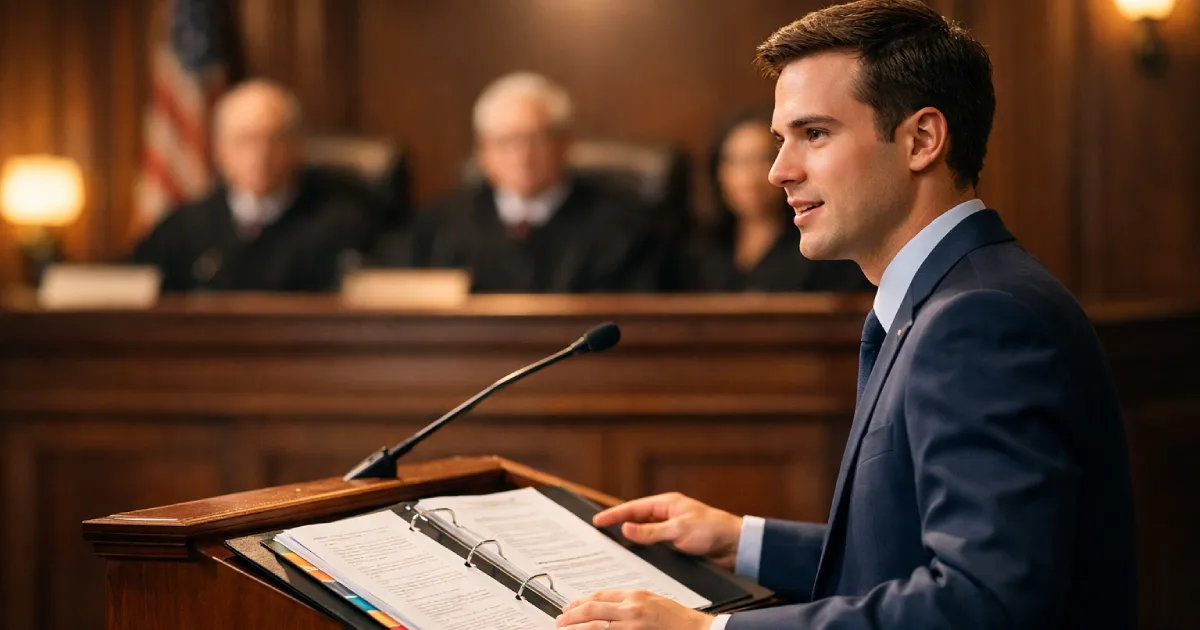
Best Law Schools for Appellate Advocacy & Moot Court
Looking for the best law schools for appellate advocacy? Based on Supreme Court clinic opportunities, national moot court performance, and federal appellate clerkship placements, the top programs include:
- Yale Law School (The undisputed Supreme Court clerkship feeder)
- University of Virginia (Elite Article III federal clerkship rates)
- Georgetown Law (The Supreme Court Institute in Washington, D.C.)
By David Chen, Esq.
Former Federal Appellate Clerk & BigLaw Appellate Litigator
What is Appellate Advocacy? (Appellate vs. Trial Work)
While trial courts are about uncovering facts (juries, evidence, witness cross-examination), appellate courts focus entirely on the law. Appellate litigators argue before panels of judges to correct legal errors made at the trial level or to shape constitutional interpretation.
The core weapon of an appellate lawyer is the Amicus Brief or merit brief—a meticulously researched, flawlessly written legal document. Oral arguments are secondary and involve intense questioning by judges. If you prefer deep legal research, constitutional theory, and writing over courtroom theatrics, appellate advocacy is your path.
Typical BigLaw signing bonus for federal appellate clerks
The "golden ticket" federal clerkships
The primary focus of daily appellate practice
The ultimate appellate destination
How We Rank the Best Appellate Programs
For appellate advocacy, the metrics are highly specific. We evaluate schools based on their ability to place students in the most prestigious corridors of federal power.
The percentage of graduates landing Article III federal clerkships—the absolute prerequisite for an elite appellate career.
The availability and quality of clinics where students actually draft cert petitions and amicus briefs for the U.S. Supreme Court and Federal Circuits.
Historical performance in prestigious national appellate competitions like the National Moot Court Competition or Jessup International.
The strength, requirements, and faculty expertise of the legal research and writing (LRW) curriculum.
Top 5 Law Schools for Appellate Advocacy (2026 Rankings)
| Rank | Law School Name | Supreme Court Clinic | Notable Feature |
|---|---|---|---|
| #1 | Yale Law School | Yes | #1 Supreme Court Clerk Placement |
| #2 | University of Virginia School of Law | Yes | Elite Article III Clerkship Rate |
| #3 | Harvard Law School | Yes | Multiple Appellate Clinics |
| #4 | Georgetown Law | Yes | Supreme Court Institute |
| #5 | University of Chicago Law School | Yes | Exceptional Clerkship Rate |
Yale Law School
Yale is the undisputed king of federal clerkships and Supreme Court placements. Its Supreme Court Advocacy Clinic allows students to draft cert petitions and merit briefs for actual SCOTUS cases.
University of Virginia School of Law
UVA consistently places an extraordinary percentage of its class into Article III federal clerkships. Its Supreme Court Litigation Clinic has a remarkable track record of getting cases granted certiorari.
Harvard Law School
Harvard's sheer scale means it offers unparalleled resources for aspiring appellate litigators, including multiple Supreme Court and appellate clinics, and a massive alumni network on the federal bench.
Georgetown Law
Georgetown's location provides students with direct access to the Supreme Court, the D.C. Circuit, and elite appellate boutiques. The Supreme Court Institute offers unique mooting opportunities for advocates arguing before the Court.
University of Chicago Law School
Known for its intense intellectual rigor and Law & Economics focus, Chicago trains students to dismantle and construct complex legal arguments, making it a primary feeder for the federal appellate judiciary.
What to Look for in an Appellate Advocacy Program
If your goal is to argue before the highest courts in the land, you need a law school that provides elite appellate training. Look for these four critical components:
Robust Moot Court Honors Societies
Moot Court simulates appellate arguments. Strong programs have well-funded teams that travel nationally and internal competitions judged by actual sitting federal judges.
Supreme Court and Federal Appellate Clinics
Elite schools allow 3L students to work under the supervision of seasoned appellate specialists to draft real briefs (like an Amicus Brief) filed in federal circuit courts or the Supreme Court.
Strong Faculty Connections to the Judiciary
Appellate hiring is notoriously insular. You need professors who are former Supreme Court clerks themselves, as they make the phone calls that secure your clerkship interviews.
Advanced Legal Writing Seminars
The 1L legal writing class is just the beginning. The best programs offer advanced seminars in appellate brief writing, advanced constitutional law, and federal courts jurisdiction.
Career Outcomes: Clerkships, Big Law, and Government
The career trajectory of an appellate litigator almost universally begins with a federal clerkship. Serving as an Article III clerk provides unparalleled insight into how judges make decisions.
The Federal Clerkship Bonus
Because of the intense demand for appellate talent, elite Big Law firms currently offer signing bonuses exceeding $100,000 to $125,000 for federal circuit clerks, and up to $500,000 for U.S. Supreme Court clerks.
Big Law Appellate Practices
After clerking, many join the dedicated appellate practice groups of firms like Gibson Dunn or Jones Day, handling high-stakes appeals and complex legal briefing.
The Solicitor General's Office
The pinnacle of government appellate work is the U.S. Office of the Solicitor General (OSG), which represents the federal government before the Supreme Court.
The Appellate Career Path
Elite Law School
Focus on Moot Court, Law Review, and Appellate Clinics.
Federal Clerkship
1-2 years clerking for a Federal District or Circuit Judge.
Big Law or Government
Join an appellate boutique, Big Law appellate group, or the DOJ.
Partner / Judge / SG
The ultimate destination: arguing at SCOTUS or sitting on the bench.
Frequently Asked Questions
Practically, yes. While there are rare exceptions, elite appellate practices in Big Law and government almost exclusively hire former federal circuit or Supreme Court clerks. It is the defining credential for the practice.
Moot Court simulates appellate advocacy (arguing legal errors before a panel of judges using briefs). Mock Trial simulates trial advocacy (opening statements, examining witnesses, and presenting evidence to a jury).
Yale, Harvard, Stanford, and the University of Chicago traditionally place the vast majority of U.S. Supreme Court clerks year after year. Attending one of these T14 schools is critical for SCOTUS aspirations.
Typically, yes. Because students are drafting live briefs for federal courts, schools require them to have completed their core doctrinal classes, constitutional law, and advanced legal writing before participating.
Aiming for the appellate bench or a prestigious clerkship?
Check out our comprehensive rankings or explore our LSAT preparation guides to boost your admissions chances at these elite institutions.